With all the excitement of the holiday season (Sinterklaas here in the Netherlands and Christmas in France), December’s humble and quiet forest becomes a peaceful refuge for everyone: parents and children alike! This week, I’m sharing two activities you can enjoy with your children in the forest in December… The theme? Birds.
The December Forest: perfect for your child’s sensory development!
As winter approaches with cold, damp weather and very short days — it can be hard to find the motivation to head out for a walk in the woods. And yet, with the right gear (I’ll make a post about this soon!), the December forest offers a whole world of tiny sensory pleasures to savor.
Touch isn’t a sense that’s often used at school for learning.
Yet scientists emphasize how important haptic perception is for children’s development. As Maria Montessori also reminded us, children learn through their hands. In December, the forest becomes a wonderful place for tactile exploration: stroking soft moss, crumbling decomposing leaves on the ground, experimenting with ice in puddles or frost on leaves, feeling the prickliness of holly leaves or fir needles…
Smell is the sense that transports me the most into wonder.
Can you smell the resin of conifers? The fresh humus? The last hints of mushrooms? And when it’s really cold, the near-absence of scent, making the air feel crisp and pure?
Sight also takes on a new dimension.
During spring and summer, we look closely at leaves, flowers, and insects. But late autumn and winter invite us to look farther. Bare branches open long, mysterious views between tree trunks, as though revealing the forest’s hidden secrets. With pale winter sunlight or drifting mist, December gives the woods a quiet and magical atmosphere.
Hearing is resting, just like the forest.
Each animal has its own winter strategy: sleeping deeply (hibernating), resting in sheltered spots (wintering), or fly to warmer regions (migrating). The forest becomes silent. And silence… can be listened to 😉 It relaxes us.
Let your children truly feel the forest. Notice what each sense discovers and share your impressions. Visual and auditory exploration will naturally guide you toward two playful, educational bird-themed activities.
First Activity: spotting old bird nests
Let’s begin with a little magical story…
Children love stories (mine certainly do!) I often tell them lil' tales as we walk. It sparks their curiosity, sets the mood for the activity, and introduces new vocabulary or concepts. So trust yourself and give it a try!
For this activity, you might imagine a tiny robin searching for a cozy place to sleep on a cold December night. It could explore various spots: an owl’s hollow tree, a kingfisher’s burrow... before finally settling down in a dense evergreen bush.
The activity
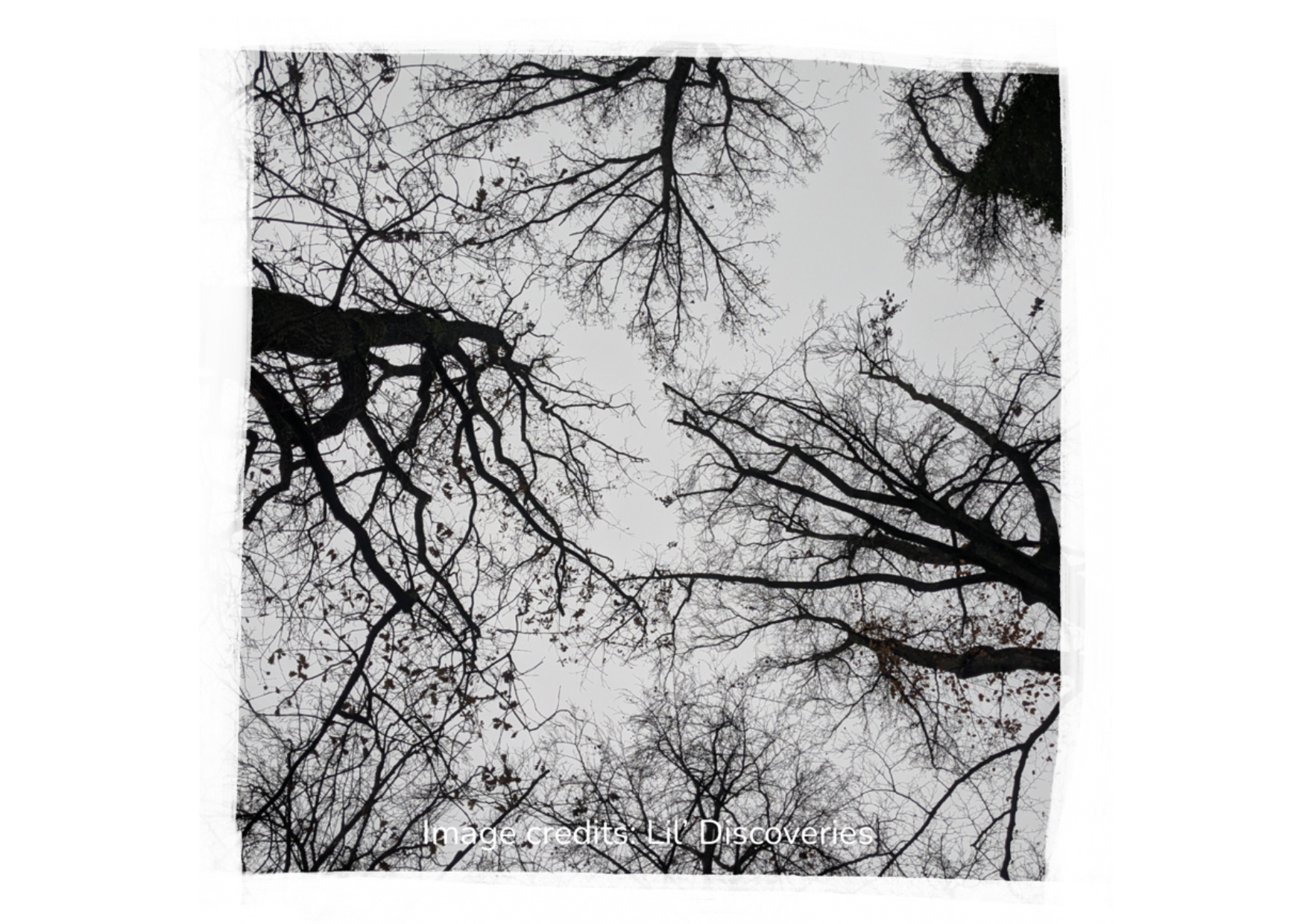
The idea is simply to walk and look. Invite your children to look up… We often look down when we walk, but observing tree branches has something both magical and soothing. Start at the trunk, then follow a branch with your eyes all the way to its tip. It’s like a little labyrinth!
Now repeat in front of a tree with a nest from last spring. Surprise guaranteed! Then set off on a nest treasure hunt. Be mindful not to turn it into a competition for children under six. If you want to add excitement, make the kids a team against the adults: a great way to nurture their self-esteem 💛
This activity is wonderful for developing concentration: long moments of quiet focus while observing, followed by bursts of running to check the next trees. This alternation between slow focus and fast movement is perfect for young children.
The educational angle
You can remind your children that birds don’t live in their nests. Nests are only built in spring to raise chicks and abandoned by late summer. When leaves fall in autumn, old nests suddenly become visible: a forest revealing its secrets. Most forest birds sleep in trees, dense bushes, hollow trunks, or evergreen conifers that keep their foliage in winter.
If your child is interested, you can explore where different birds sleep depending on their habitat:
- Wetland birds sleep among reeds like ducks or burrows like kingfishers.
- Seabirds, like gulls, sleep on the water, cliffs, or even sea ice (like penguins).
- Urban birds sleep under rooftops, in wall cracks, or in park trees.
- Mountain birds like eagles sleep on steep cliffs.
- Birds of dry savanna, like ostriches, can sleep crouched on the ground keeping their heads up to watch for predators.
- And some literally live in the sky, like swifts sleeping while flying!
At home, you can extend the learning with a book about birds or Montessori classification cards. For curious children, this outing is the beginning of a wonderful deep dive into the world of birds.
Second Activity: feeding the birds
Another magical story to begin with...
Here’s one that comes to mind, starting with a sensory description of the forest. Look around you and use gestures, touches, and silly sound effects (children love them!): Autumn and its abundance of fruit is over. The ripe apples have fallen ("plop") and decomposed, giving off a vinegar smell that tickles the nose ("achoo!"). Seeds are scarce, either hidden by squirrels ("tchik-tchik-tchik") or buried beneath thick layers of fallen leaves. Under the little girl’s boots, the ground goes "crrrick-craaack": these are frozen leaves breaking like tiny chips. Earthworms are safe, deeper underground. In the quiet December forest, Flora suddenly hears a sweet and melodious birdsong "piou-piou-piou". She stops, listening carefully. She spots a beautiful robin perched on a branch nearby. She’s sure of it: its bright red-orange chest looks like a superhero’s mask. But then her expression changes: she’s realized something important! No more fruit, fewer seeds, no worms…How do birds eat in winter? It must be so hard for them! So, with a burst of empathy, she decides on a very important mission for the next few months: feeding the birds!”
The activity
Parent, slip into your backpack before leaving: an apple, sunflower seeds, jute string, scissors, and an apple corer.
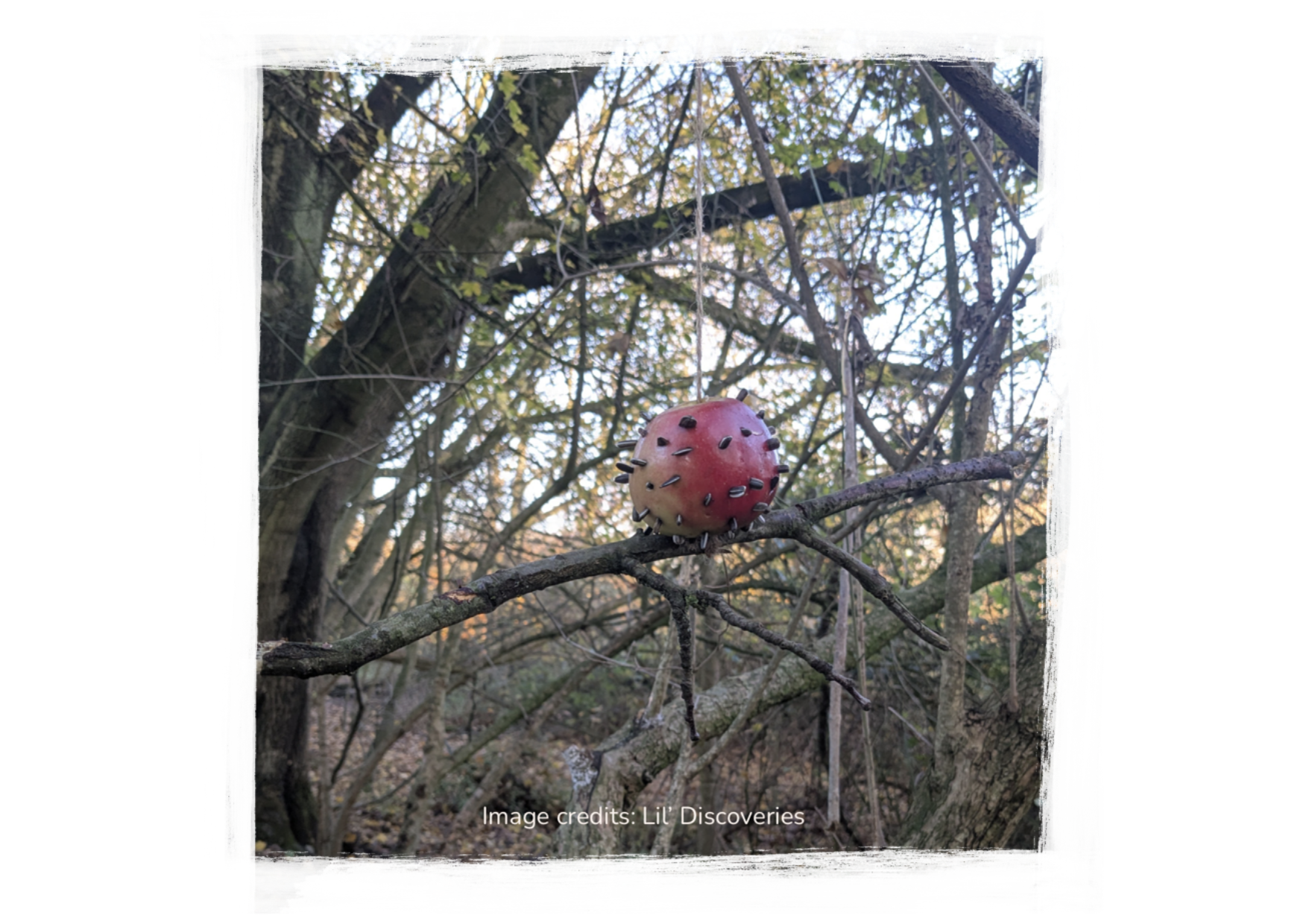
After your story, gather a few sticks to create a small perch. Show your child how to tie a knot to secure the string to the stick. Then let your child use the apple corer to remove the core. They can poke sunflower seeds all around the apple. When it’s ready, thread the string through like a bead and hang this tasty mobile high on a branch.
The educational angle
First, there’s the awareness-building part: feeding birds can truly help them survive, but there are important rules:
- Feed them only from December to February: this is when they need it to survive.
- Do not feed them bread, cakes, rice, salty foods…
Then, you can explore the bird's diet and link it to the shape of their beaks:
- Seed-eaters like sparrows have short, strong, cone-shaped beaks.
- Carnivorous birds like eagles have hooked beaks to tear meat.
- Piscivorous bird (kingfishers) and insectivorous bird (swallows) have long beaks for catching prey.
- Aquatic herbivorous birds, such as ducks, have flat beaks.
Birds also adapt their diet to the seasons: for example, tits mainly eat insects, but in autumn and winter they switch to seeds, berries, and fruit.
To conclude…
There is so much joy (and vitamin D!) to be found on forest walks in December. I’ve shared two bird-themed outings you can enjoy with your children: full of discovery, connection, and learning.
You can also check out my video @lil.discoveries to see these nature activities in action!
And if you’d be interested in nature activity sheets with similar content, let me know in the comments on social media… It might just be my next project. 😉